Proofreading, Research & Fact-Checking
Sample projects
Copyediting and proofreading for Ashland Creek Press
Though proofreading has always been a significant portion of my day job, some of my favorite projects were in a freelance capacity. Starting in college, I proofread novels and nonfiction books (listed on the homepage of my editing website) for an indie publisher in Ashland, Oregon. Usually I was proofreading in the truest sense of the word, reviewing PDF proofs at the step prior to publication, but I sometimes stepped in closer to the copyediting stage.
My pursuit of accuracy and consistency left no stone unturned. I would check the actual weather on a date mentioned. I would create story timelines to ensure that sequels were accurate. And of course I would call out typos, orphans, and widows.
Extracting insights for a healthcare company thought leadership report
I love logic puzzles where all the information is in front of me and I just have to put the pieces together. Similarly, at work, I love when I'm given a project that can be described as "analyze and synthesize."
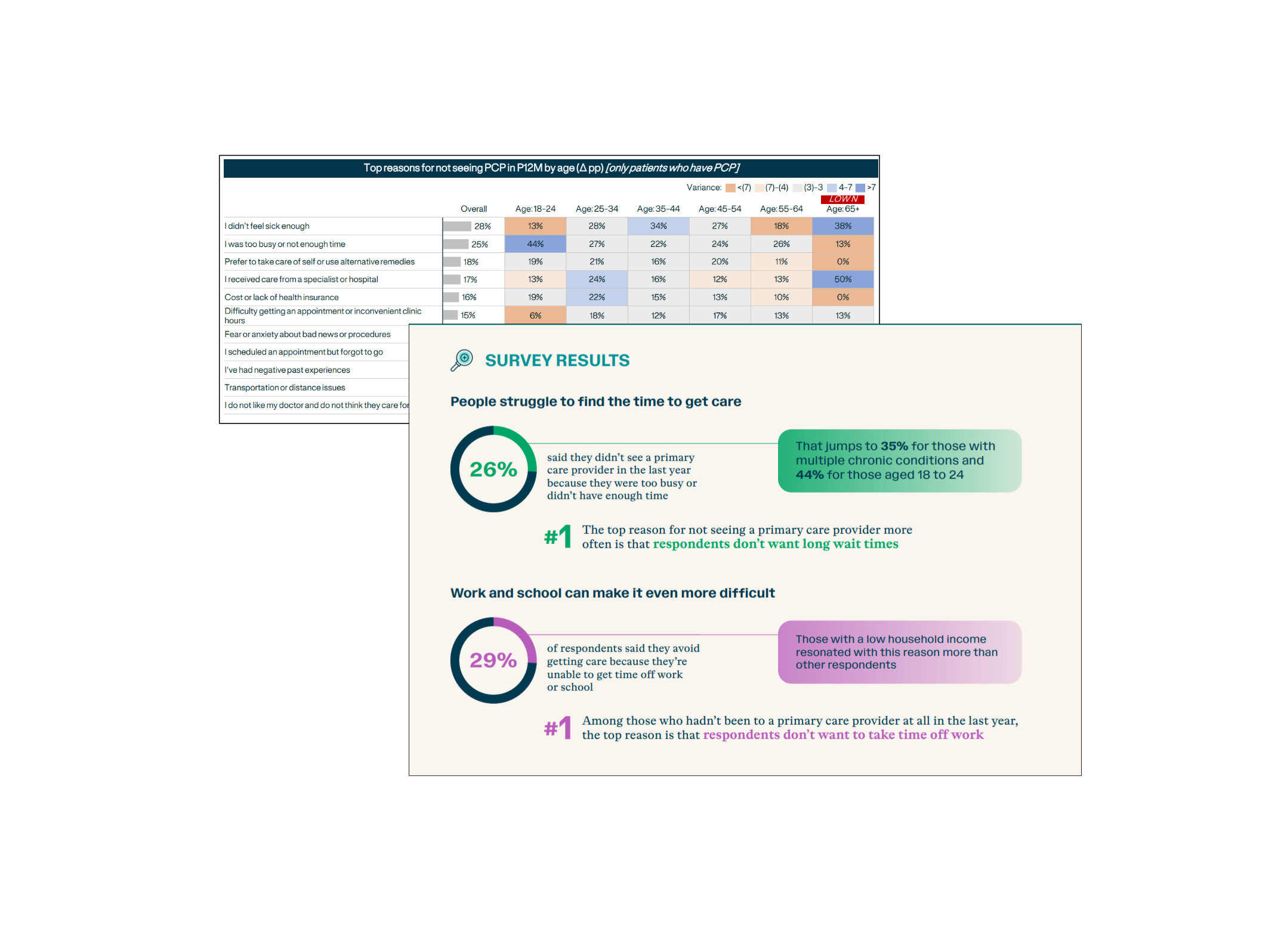
In this one, a healthcare company had commissioned research to inform their own competitive approach, and they asked my agency to find a way to use the data to support an external-facing thought leadership report. I combed through the 218 pages of information provided and pulled out the relevant story while discarding weak or misleading potential claims, and with the structure I built my writer coworker only had to add a little connective tissue. Shocking everyone, we got from inputs to finalized report in only a few weeks.
Third-party research for a telecom's content marketing
When your company doesn't do any of its own industry research and you also don't want to cite direct competitors in your materials, it can get tricky to support the narrative in those materials with anything that feels concrete to the reader. Not to worry: I have elevated this company's "stats" game by diving deep into surveys and reports about topics from cybersecurity to remote work and industries from manufacturing to hospitality.
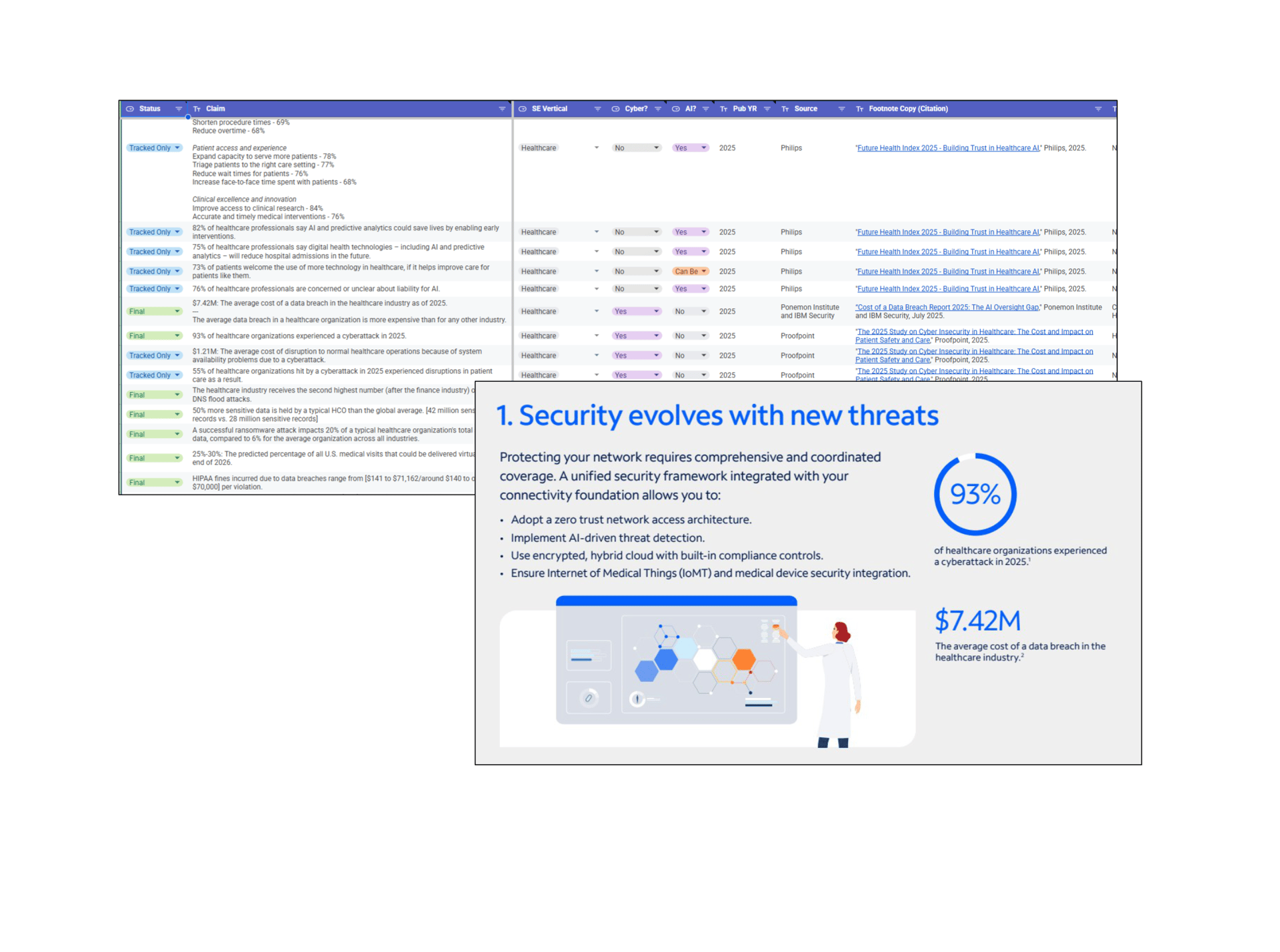
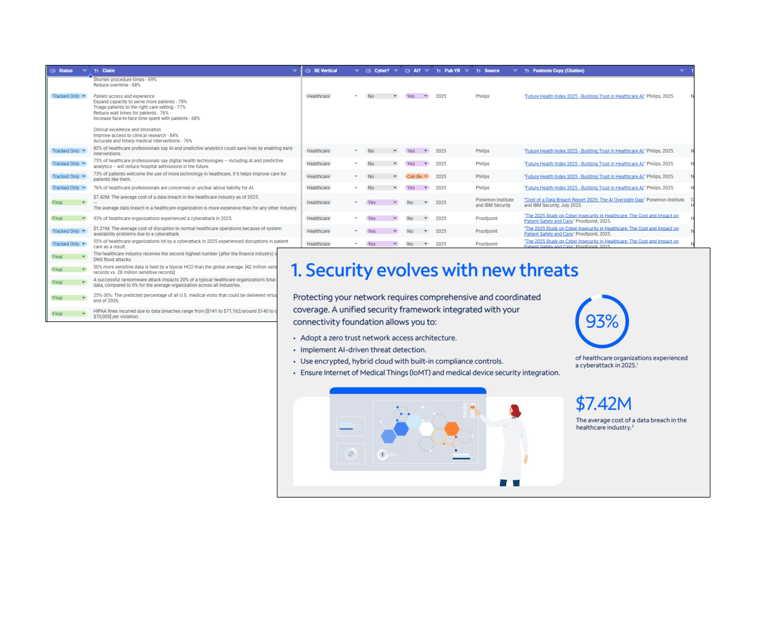
No AI-hallucinated stat will do, no "stat roundup" blog posts regurgitating a data point from 15 years ago as if it's new. The hunt is a challenge and a delight. And I maintain a living record, a 600ish-item spreadsheet, of stats we've used already (and where) and others we can potentially use for future assets.
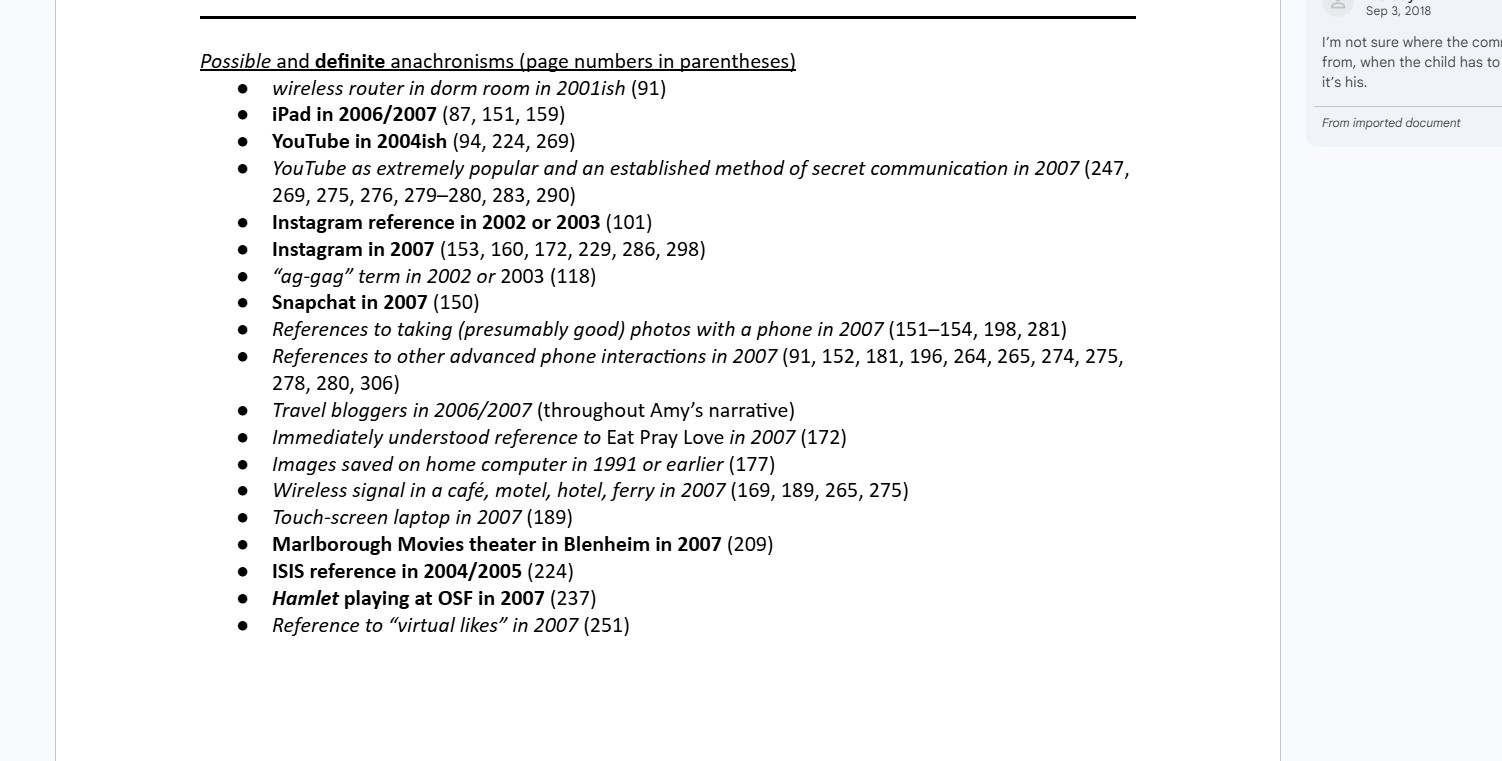
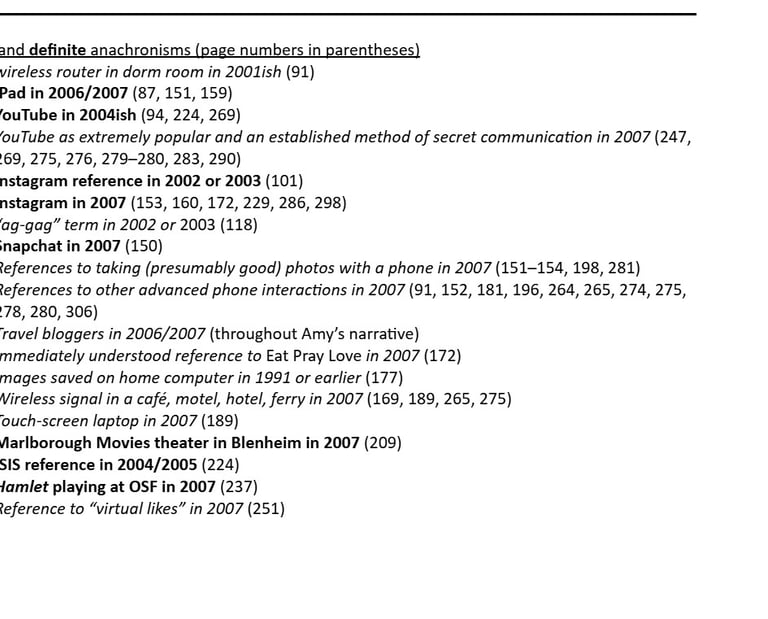
A list of potential and definite anachronisms I found in one novel. (They didn't ask me to do this. But I felt it was important.)
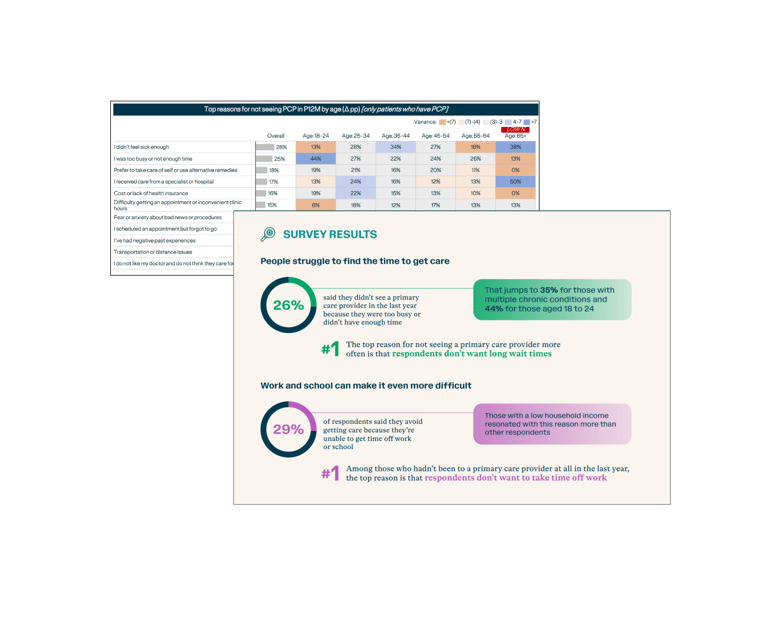
One of the 218 pages of data inputs for the report (back) and part of the finalized report that put the data together into a story (front).
A portion of the data point tracking spreadsheet (back) and part of an infographic utilizing some of those data points (front).
Melody Nova
This site created with low cognitive surrender. All copy generated and edited by my human brain. Stock photos by real photographers via Unsplash. Site design using manual WYSIWYG builder tools.